
We have all watched the cycle play out.
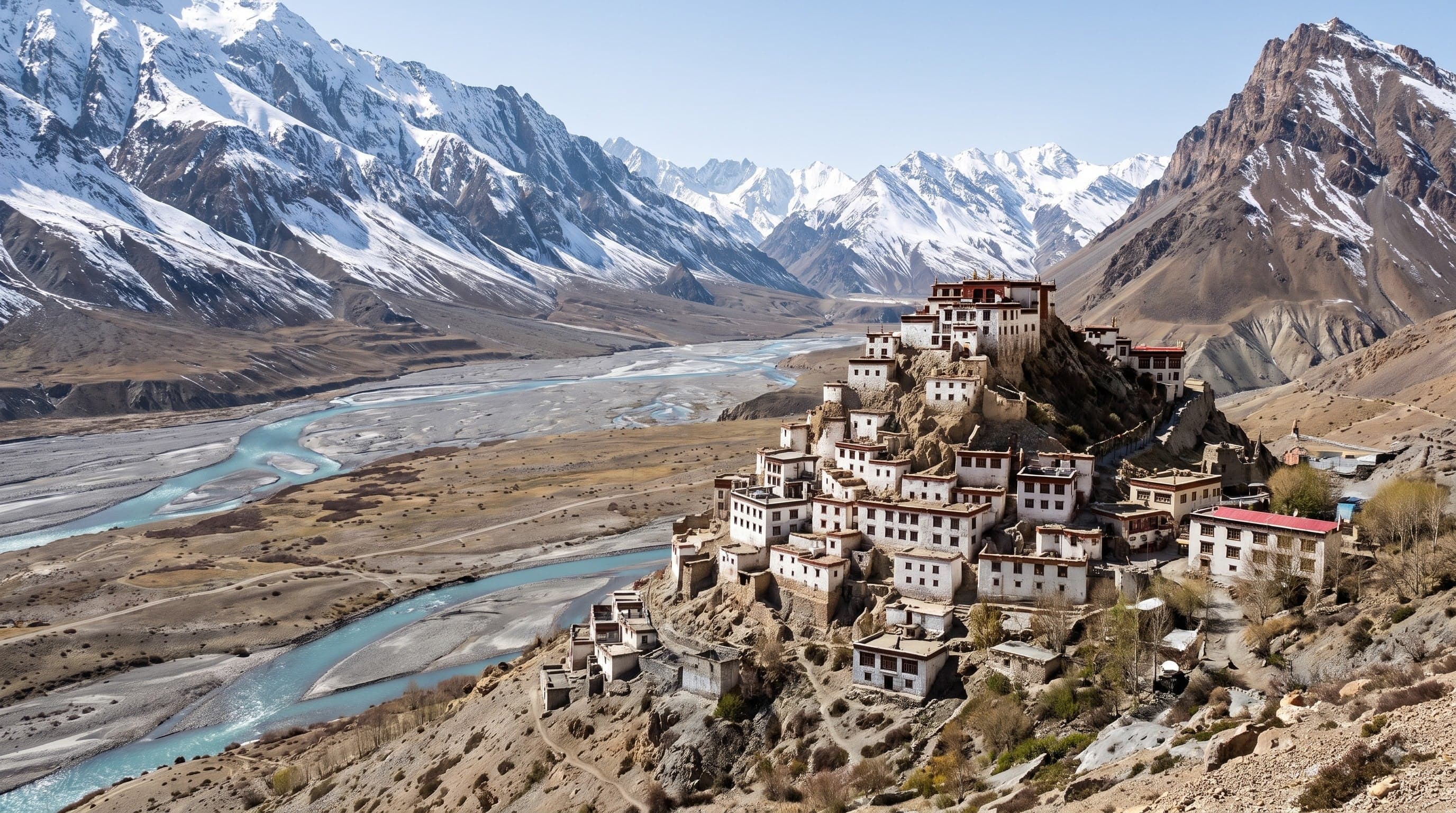
A 15-second video surfaces on a social media feed. It captures a secluded waterfall in the Western Ghats, an isolated mountain hamlet in the Himalayas, or a pristine river bend flanked by ancient deodars. The video is captioned with breathless urgency: "You won't believe this secret hidden paradise in India!"
Within forty-eight hours, the post has two million views. Within three months, the quiet single-lane road leading to the village is choked with idling diesel SUVs.
By year’s end, makeshift plastic snack shacks have sprung up along the stream banks. The village borewell, designed to support eighty families, runs dry under the strain of sudden commercial homestays. Discarded water bottles, gutka wrappers, and broken beer glass gather in the undergrowth. And the local elders, who once welcomed travelers with open verandas, withdraw behind closed doors.
Then come the sorrowful comments beneath subsequent posts: “Please don't make this place famous.” “Why did you have to tell everyone?” “It was better before the internet found it.”
There is a profound contradiction at the heart of modern exploration. We want people to encounter lesser-known places. We want rural economies to benefit from ethical tourism. But when discovery transforms into instant mass demand, the very qualities that made a place worth experiencing are consumed and erased.
       THE VIRAL OVERTOURISM CYCLE

   [ Quiet, balanced village ]
               │
               ▼
     [ Viral 15s Geotag ]
               │
               ▼
 [ Sudden Mass Influx of Convoys ]
               │
               ▼
 [ Resource Depletion & Plastic Waste ]
               │
               ▼
   [ Loss of Dignity & Ecosystem ]
The Problem of Velocity and Carrying Capacity
The fundamental flaw in modern travel media is that it compresses geography into a visual trophy without providing context, rules, or seasonal understanding.
Every ecosystem has a finite carrying capacity—a measurable limit to how many footsteps, vehicle tyres, water litres, and waste units it can absorb before its natural and social fabric breaks down.
-
In the Trans-Himalayas (Spiti and Ladakh): The limiting factor is water and waste infrastructure. High-altitude deserts operate on delicate glacial melt streams (kuhls) and traditional dry-composting sanitation. A rapid influx of commercial hotels demanding flush toilets rapidly pollutes local water tables and produces mountain landfills that never decompose in the sub-zero air.
-
In the Granite Kopjes of Jawai: The limiting factor is wildlife space. Free-ranging leopards coexist with Rabari pastoralists because the animals feel secure in their rock caves. When twenty safari jeeps crowd a single rock kopje for an Instagram close-up, the predator is stressed, and the fragile peace between human and cat begins to fracture.
-
In the Cloud Forests of North Bengal (Neora Valley): The limiting factor is acoustic and ecological fragility. Virgin mosses, canopy orchids, and nesting birds cannot tolerate constant tourist footfall and loudspeaker noise.
The issue, therefore, is not that people wish to see these landscapes. The issue is the reckless speed at which digital media converts discovery into unmanaged consumption.
The Foxpels Rule: Shifting from "Where" to "How"
Responsible storytelling cannot simply tell travelers where to go. It has an obligation to dictate how to go, when to go, how to behave, and when to step back.
┌─────────────────────────────────────────────────────────────┐
│                 THE FOUR FIELD PROTOCOLS                    │
├─────────────────────────────────────────────────────────────┤
│ 1. Context Over Geotags: Never reduce a sacred or fragile   │
│    location to a coordinate without cultural instructions.  │
│ 2. Spatial Velocity: Move at the pace of the landscape. Slow│
│    overland ascents preserve both physiology and community. │
│ 3. Micro-Group Thresholds: Cap field access to twelve guests│
│    to avoid exceeding village carrying capacities.          │
│ 4. Seasonal Respect: Honor the natural windows when a place │
│    needs to rest and recharge without visitor pressure.     │
└─────────────────────────────────────────────────────────────┘
Moving at the Speed of the Land
When a traveler reaches a high mountain valley after four days of gradual overland driving through Kinnaur, they understand the fragility of the terrain. They have seen the rockfalls, the thin water channels, and the hard labor required to grow a field of green peas at 4,000 metres. They arrive as humble guests, not entitled consumers.
Protecting What Cannot Be Rebuilt
Preserving a place does not mean locking it in a museum vault and denying rural communities the economic fruits of travel. It means establishing firm, uncompromising boundaries around how that travel takes place.
Before we photograph an artisan, before we enter an ancient gompa sanctum, before we drive into a leopard habitat, we ask a simple grounding question: Does our presence here protect this landscape’s dignity, or are we simply extracting a moment for a screen?
The future of travel will not be judged by how many hidden places we mapped. It will be judged by whether those places remained whole, quiet, and sacred long after our footsteps faded.