
One of the most persistent misconceptions about travel in India is the belief in a single, monolithic "tourist season."
Mainstream guidebooks often advise travelers to visit strictly between November and February, dismissing the rest of the year as either too hot or too wet. This advice ignores subcontinental geography.
India spans over thirty degrees of latitude and rises from sea level to the highest mountain summits on earth. While the northern plains may be cold in January, the trans-Himalayas are locked under four feet of ice. While Rajasthan experiences dry winter sun, the southern peninsula thrives under a completely different monsoon rhythm.
To travel thoughtfully across India is to understand that the seasons do not merely change the temperature—they change the physical landscape, the roads that can be traversed, and the entire cultural calendar.
              THE SUB-CONTINENTAL SEASONAL WHEEL

                   [ SUMMER: JUN — SEP ]
                 Trans-Himalayan Rain Shadow
                     (Ladakh & Spiti)
                            ▲
                            │
   [ WINTER: NOV — FEB ] ───┼─── [ MONSOON: JUL — AUG ]
   Salt Flats & Deserts     │     Lush Wetlands & Rejuvenation
   (Kutch, Rajasthan, South)│     (Kerala Backwaters)
                            ▼
                   [ BLOOM: SEP — OCT ]
                 Montane Meadows & Ridges
                    (Uttarakhand & Kumaon)
1. Summer in the Rain Shadow: Ladakh & Spiti (June – September)
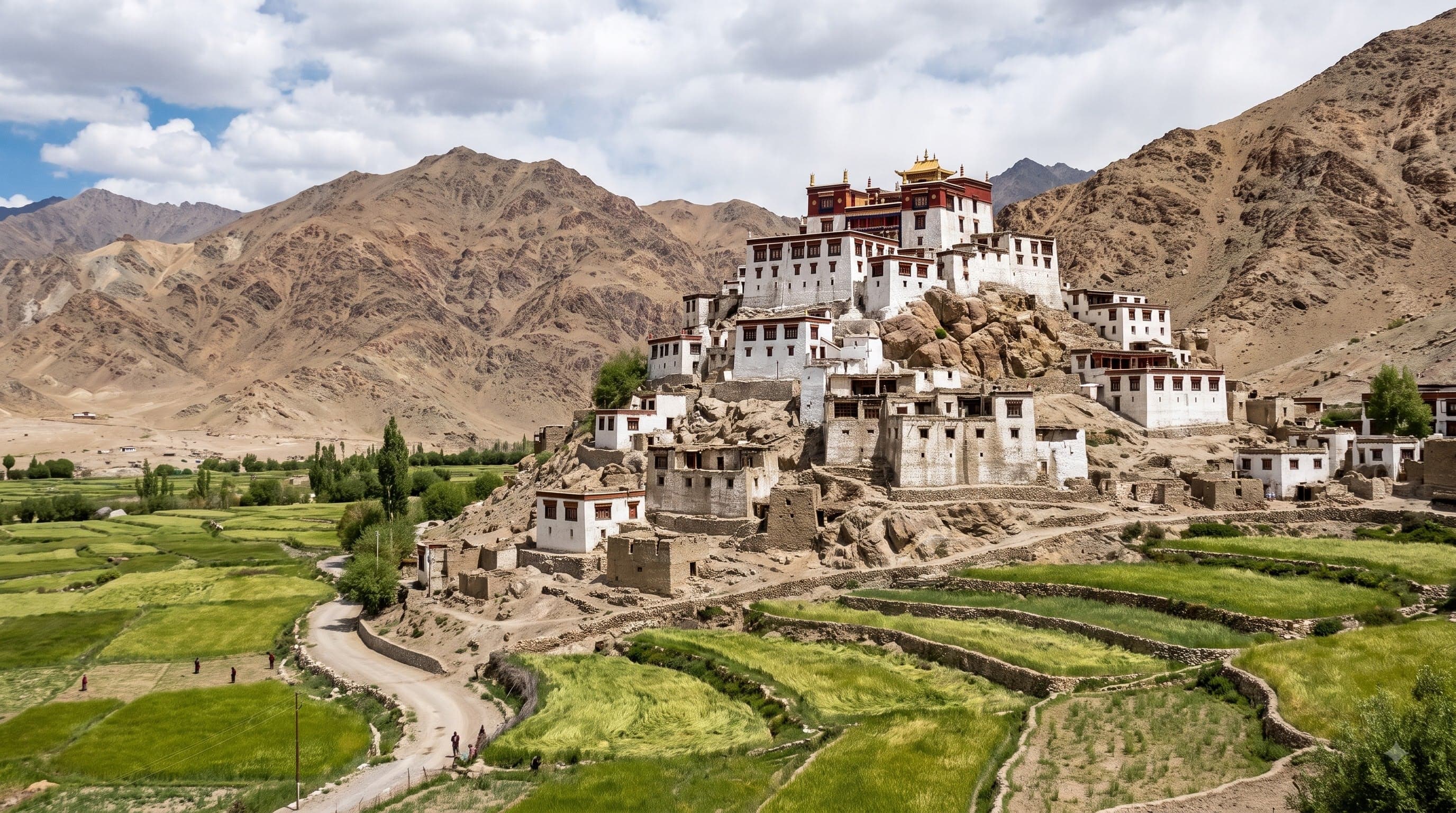
When the monsoon clouds engulf the plains and hills of northern India, the great wall of the Greater Himalaya acts as a natural climatic barrier. Behind this mountain barrier lies the high-altitude trans-Himalayan rain shadow of Ladakh and Spiti.
During the summer months:
- The mountain passes of Khardung La (5,359m), Chang La (5,360m), and Kunzum Pass (4,551m) finally clear of snow.
- Days are crisp, dry, and flooded with high-altitude sunlight (20°C–25°C).
- Glacial meltwater fills mountain rivers, allowing travel to remote border villages like Turtuk and high alpine lakes like Pangong Tso and Chandratal.
- For the traveler, summer is not a season to avoid—it is the only window when the high trans-Himalayas are truly alive.
┌─────────────────────────────────────────────────────────────┐
│                 FOUR SEASONS / FOUR MICRO-CLIMATES          │
├─────────────────────────────────────────────────────────────┤
│ 1. Summer (Jun–Sep): Trans-Himalayan Plateau (Ladakh/Spiti) │
│ 2. Monsoon (Jul–Aug): Southern Waterways (Kerala/Western G.)│
│ 3. Bloom (Sep–Oct): Himalayan Ridges (Uttarakhand/Sikkim)   │
│ 4. Winter (Nov–Feb): Deserts & Plains (Kutch/Rajasthan/Decc)│
└─────────────────────────────────────────────────────────────┘
2. Monsoon on the Waterways: Kerala (July – August)
While mass tourism avoids the southwest monsoon, those who understand Kerala know that rain is its defining aesthetic and ecological element.
The monsoon (Edavappathy) washes the dust from the tea slopes of Munnar, fills the waterfalls of the Western Ghats (Cheeyappara, Athirappilly), and turns the paddy fields of Alleppey into a vibrant green basin. In traditional Ayurvedic medicine, the monsoon is the classical season of rejuvenation (Karkidaka Chikitsa), as the cool, humid atmosphere opens the body’s pores to herbal oils. Traveling through Kerala during the rain is an experience in slow, contemplative living.
3. Autumn Bloom: The Himalayan Ridges (September – October)
As the monsoon rains recede in early autumn, the Western and Eastern Himalayan foothills experience an extraordinary transformation.
In Uttarakhand and Sikkim, the washed mountain air achieves peak atmospheric clarity, offering uninterrupted views of Nanda Devi, Trishul, and Kanchenjunga across clear blue skies. The alpine meadows burst with late-monsoon wildflowers, and the sal forests of Jim Corbett National Park re-emerge lush, dense, and full of birdlife.
4. Winter on the Salt Flats: Kutch & the Royal Deserts (November – February)
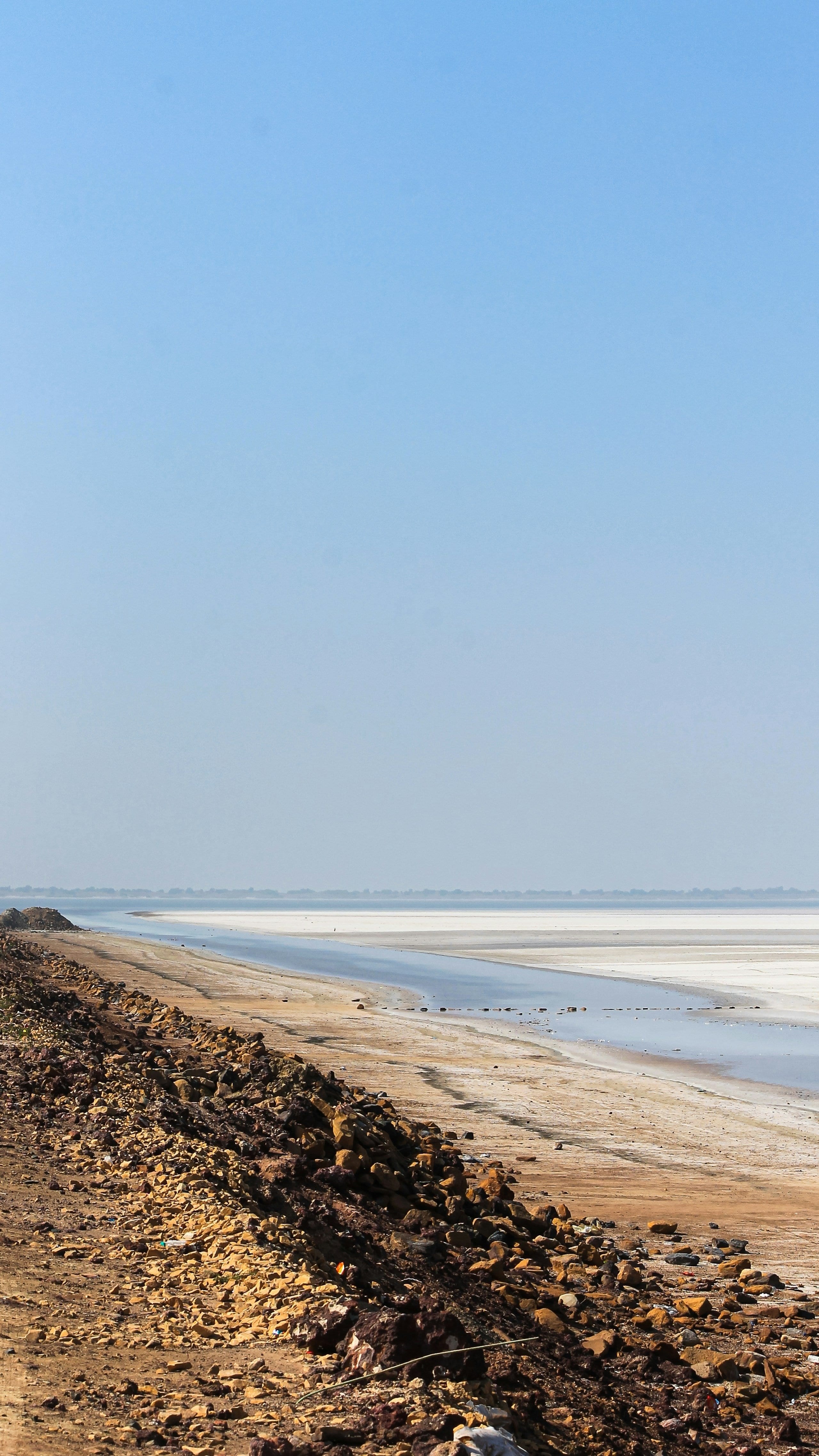
In western India, the seasonal shift is geological. During the summer monsoon, the Great Rann of Kutch is submerged under Arabian Sea tides and rainwater, forming an impassable shallow sea.
By mid-November, six weeks after the rains retreat, the water evaporates under the dry winter sun, leaving behind a hard, crystalline salt crust that stretches flat to the horizon. Winter transforms the desert into an ethereal white expanse beneath full moons. Simultaneously, the royal forts of Rajasthan (Jaipur, Jodhpur, Udaipur) and the granite hills of Jawai enter their optimal travel window, with warm sunny days and crisp desert nights.
Engineering Routes Around Climate
At Foxpels, we do not force fixed year-round itineraries onto landscapes that change with the seasons. We build our expedition calendar around geographical reality: taking travelers to the high passes when they are clear, to the backwaters when they are lush, and to the deserts when the salt has hardened.
When you align your journey with the earth’s natural calendar, you encounter India not as a crowded tourist route, but as a living continent of infinite seasonal renewal.