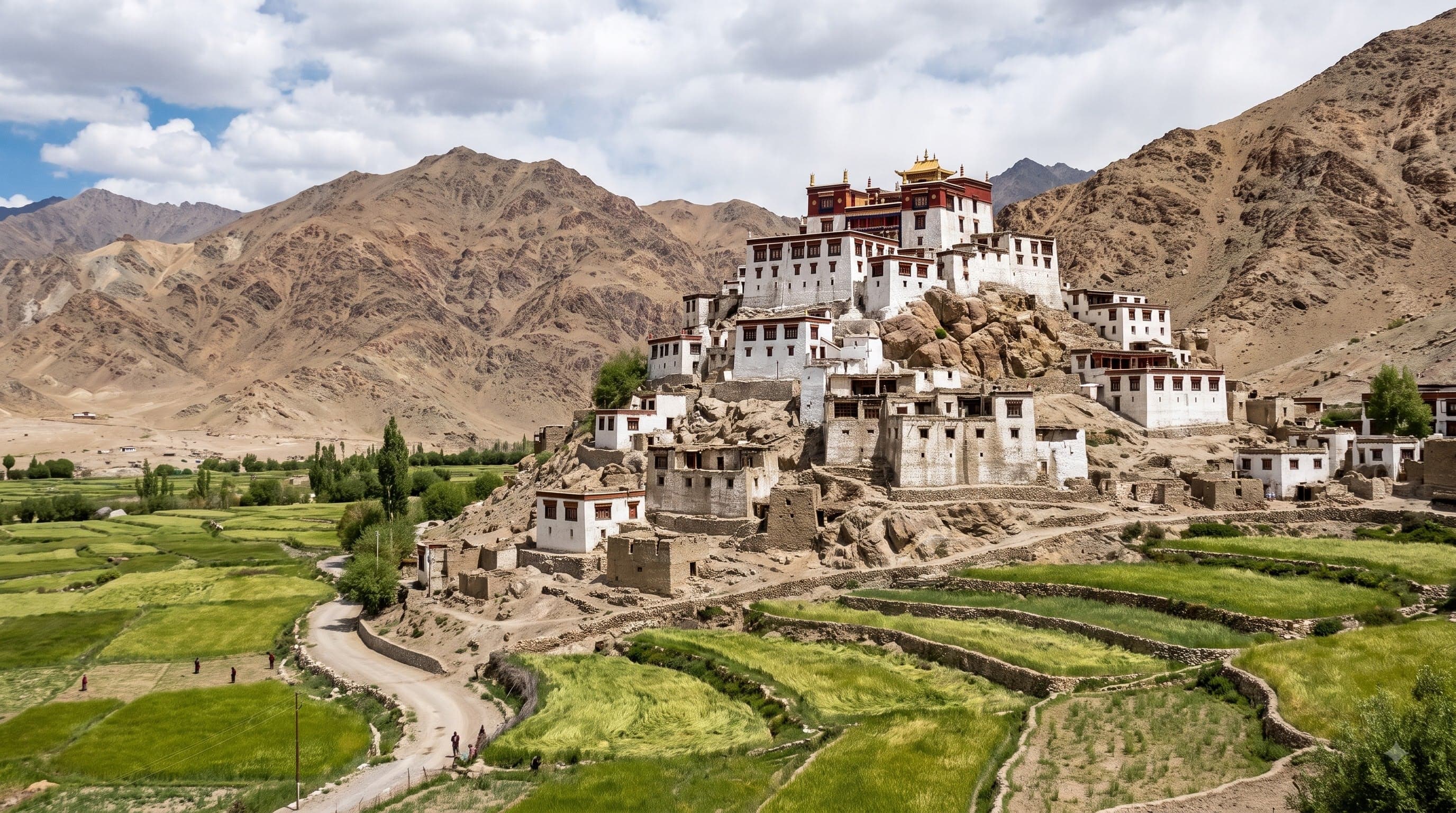


When you land at Kushok Bakula Rimpochee Airport in Leh (3,500 metres) or step out of your vehicle at Kaza (3,800 metres), the mountain air feels clean, cold, and deceptively benign. The sun shines with extraordinary clarity through the thin atmosphere. You feel energized, eager to drop your bags and explore the bazaar.
This is precisely when high-altitude travel claims its first casualties.
At sea level, the effective oxygen concentration is 21 percent, supported by a dense column of atmospheric pressure. At 3,500 metres in Ladakh, the air pressure drops by more than a third. With every breath you take, your lungs draw in approximately 40 percent fewer oxygen molecules than they did at the coast or on the northern plains.
Your physiology does not adapt to this sudden barometric deficit in two hours. It adapts across forty-eight to seventy-two hours through an intricate cascade of biochemical adjustments: increasing your respiratory rate, altering your blood pH, and slowly stimulating your bone marrow to produce more oxygen-carrying red blood cells.
Attempting to bypass this physiological sequence is not an act of adventurous bravery. It is an operational failure.
BAROMETRIC PRESSURE & EFFECTIVE OXYGEN AT ELEVATION

Sea Level (0m)        ████████████████████ 100% Barometric Baseline
Leh / Kaza (3,500m)   ████████████         ~60% Effective Pressure
Kunzum Pass (4,551m)  █████████            ~55% Effective Pressure
Khardung La (5,359m)  ███████              ~50% Effective Pressure
The Anatomy of Acute Mountain Sickness (AMS)
Acute Mountain Sickness is the body’s direct alarm system. It begins innocuously: a dull throbbing headache behind the temples, mild nausea, lightheadedness when climbing a flight of stairs, and interrupted sleep.
If ignored, mild AMS can progress within hours into life-threatening emergencies:
- High Altitude Pulmonary Edema (HAPE): Fluid buildup in the air sacs of the lungs, causing breathlessness at rest, persistent dry cough, and cyanosis.
- High Altitude Cerebral Edema (HACE): Fluid leakage and swelling in the brain, resulting in ataxia (loss of physical coordination), confusion, hallucinations, and coma.
The critical danger in modern commercial travel is the tight vacation schedule. Tour operators frequently fly guests into Leh on Monday morning and schedule a grueling crossing of Khardung La (5,359m) or Pangong Tso (4,250m) on Tuesday afternoon. This rushed pacing accounts for why thousands of travelers spend their high-altitude holidays tethered to oxygen concentrators in hotel rooms rather than experiencing the Himalayas.
┌─────────────────────────────────────────────────────────────┐
│               THE FOXPELS HIGH-ALTITUDE PROTOCOL            │
├─────────────────────────────────────────────────────────────┤
│ 1. Mandatory 24-48 Hour Ground Rest upon aerial arrival     │
│ 2. Progressive Overland Ascent (<500m net gain per day)     │
│ 3. Hydration Standard: 3.5 to 4 Litres of water daily       │
│ 4. Strict Zero-Alcohol & Sedative Prohibition for 72 Hours │
│ 5. Daily Pulse Oximetry & Onboard Medical Oxygen Buffers    │
└─────────────────────────────────────────────────────────────┘
Protocol in Practice: How We Engineer High Routes
At Foxpels, high-altitude safety is not a liability disclaimer on an invoice. It is the architectural framework of our itineraries.
1. The Aerial Buffer in Ladakh
When our travelers arrive in Leh on Journey 06, Day 1 is cleared of all formal sightseeing. Guests are transferred directly to their rooms with strict instructions: horizontal rest, zero stair climbs, minimal screen exposure, and steady hydration with warm water and herbal teas. Day 2 is restricted to gentle, flat walking tours of the Indus Valley monasteries (Shey and Thiksey) before any pass crossing is attempted.
2. The Kinnaur Overland Staging for Spiti
For Journey 04 into Spiti Valley, we refuse the direct shortcut over Rohtang and Kunzum Pass from Manali. Instead, we take the ancient Hindustan-Tibet highway through Kinnaur. By overnighting successively at Shimla (2,200m), Sarahan (2,150m), and Kalpa (2,960m), your cardiovascular system gradually acclimatises before you ever step foot in Tabo (3,280m) or Kaza (3,800m).
3. The Sela Threshold in Arunachal Pradesh
On the road to Tawang (Journey 14), we stage our ascent in the temperate orchards of Dirang (1,560m) before tackling the sub-zero crossing of Sela Pass at 4,170 metres (13,700 feet).
How to Prepare Your Body
If you are joining an expedition into the high desert, ground discipline begins with individual awareness:
- Hydrate Constantly: The arid mountain air evaporates moisture from your breath rapidly. Drink 3 to 4 litres of water daily.
- Avoid Alcohol and Sedatives: Both suppress your respiratory drive during sleep, causing nighttime oxygen desaturation.
- Eat High-Carbohydrate Meals: Carbohydrates are the most oxygen-efficient fuel for cellular metabolism at altitude.
- Communicate Early: A headache reported at breakfast can be managed with hydration and rest. A headache concealed until evening can turn into a midnight evacuation.
The high mountains demand reverence. When you grant your body the time it needs to adapt, the thin air ceases to be a barrier—and becomes the crisp, crystalline medium through which you encounter the trans-Himalayas in all their grandeur.