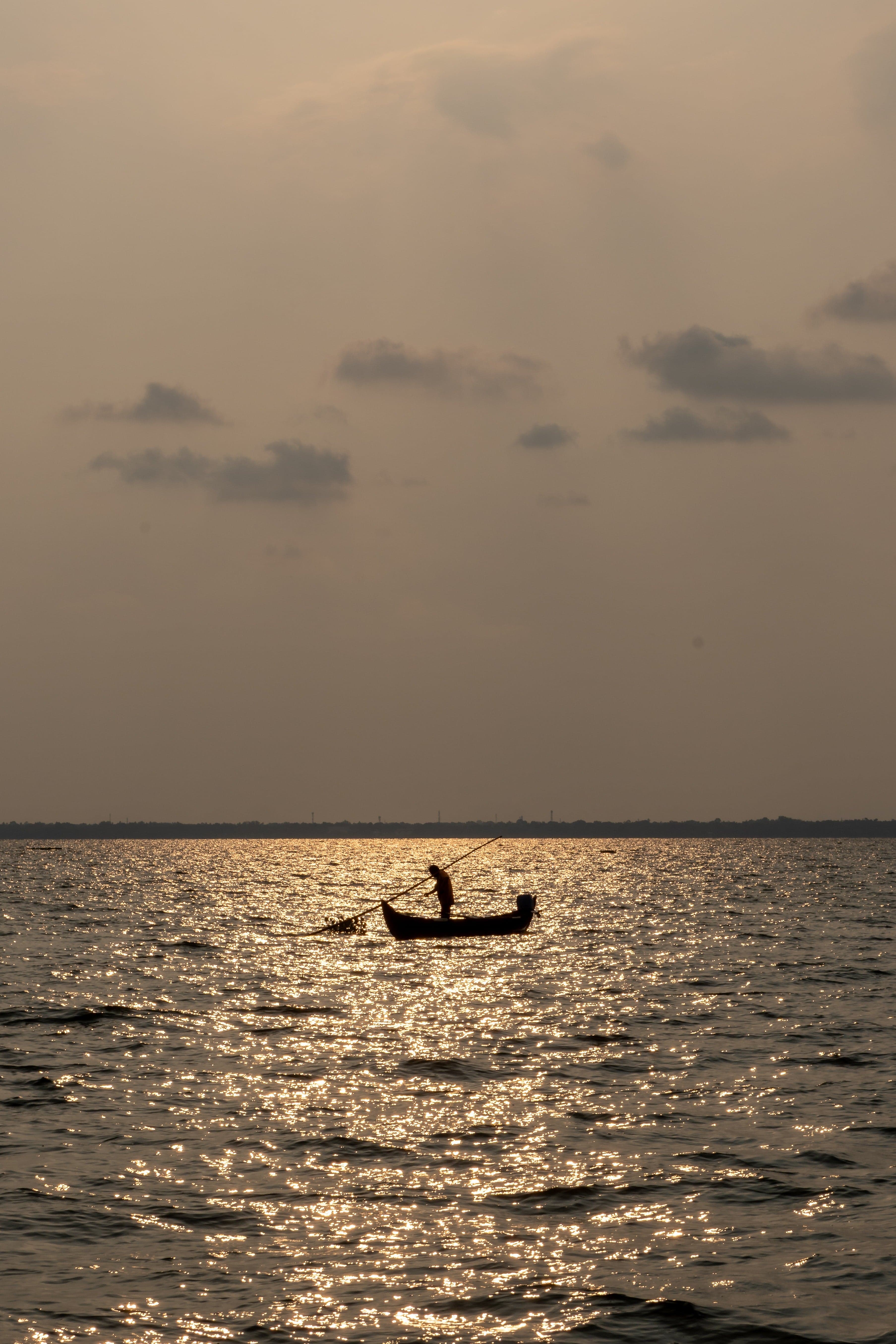

To the casual observer looking out from a holiday vessel, the backwaters of Vembanad Lake appear as an idyllic tropical tableau: still emerald waters, leaning coconut canopies, and passing canoes.
Step off the boat and onto the earthen bunds of Vaikom, and you enter a sophisticated agrarian and material civilization where every square metre of land and water is an active workspace.
In the low-lying wetlands of central Kerala, the coconut palm (Cocos nucifera) is not an ornamental feature of the landscape. It is the primary building block of household commerce, structural engineering, and daily survival. For centuries, this watery world has operated on a circular economy where nothing is discarded, nothing is synthetic, and every stage of production follows the natural flow of tidal water.
                  THE CIRCULAR COCONUT CANOPY

                 ┌────────── PALM TREE ──────────┐
                 │                               │
                 ▼                               ▼
            [ Palm Husk ]                  [ Palm Frond ]
                 │                               │
       (Retted in Saline Water)          (Plaited for Thatch)
                 │                               │
                 ▼                               ▼
          [ Coir Fibre ]                  [ Palm Trunks ]
                 │                               │
      (Hand-Spun into Yarn)             (Engineered Boats & Roofs)
                 │                               │
                 ▼                               ▼
       [ Household Cordage ]           [ Vernacular Architecture ]
The Alchemical Labor of Coir
The foundation of village craft in Vaikom is coir—the tough, fibrous husk surrounding the coconut shell.
Transforming a coarse green husk into pliable, export-grade golden yarn is a months-long manual discipline:
- Retting: Green husks are bundled into nets and submerged in the brackish, tidal channels along the lake shore for several months. Microorganisms and saline water break down the organic matter between the fibres without weakening the cellulose.
- Beating: The retted husks are hauled from the mud and beaten with heavy wooden mallets (kottu) on stone anvils by village women to separate the golden bristles from the pith.
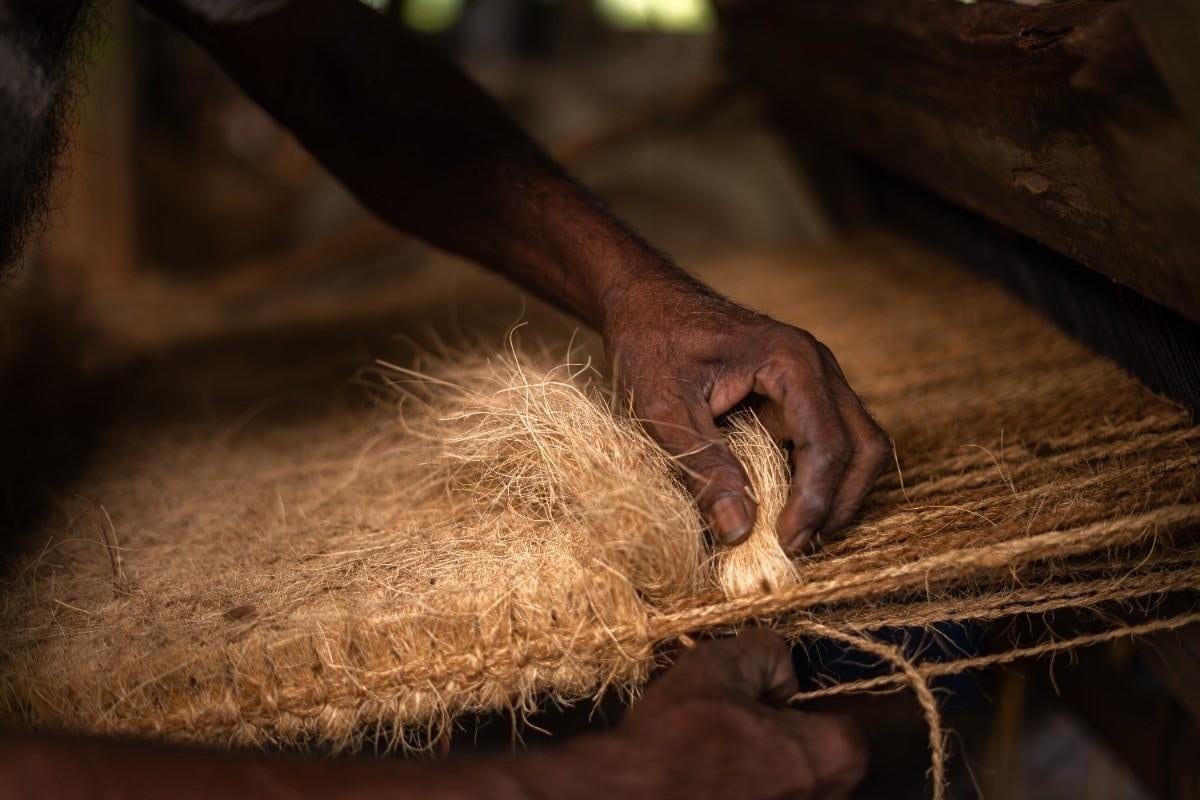
- Spinning: The cleaned fibre is rolled and spun onto hand-turned twin wooden wheels (charkhas). Working in pairs, spinners walk backward along canal paths, feeding raw fibre from waist pouches into rotating spindles with exquisite touch, producing continuous cords of uniform tensile strength.
Before synthetic nylon ropes were invented, coir from these backwaters rigged merchant sailing ships across the Indian Ocean. Today, hand-spun coir sustains rural female collectives across the backwaters, providing economic independence within domestic homesteads.
┌─────────────────────────────────────────────────────────────┐
│                 THE FOUR LIVING CRAFTS OF VAIKOM            │
├─────────────────────────────────────────────────────────────┤
│ 1. Coir Spinning (Manual twin-wheel charkha cordage)        │
│ 2. Screw Pine Weaving (Harvesting, drying, & mat braiding) │
│ 3. Toddy Tapping (Canopy sap harvesting on rope bridges)   │
│ 4. Cast-Net Fishing (Traditional hand-thrown circular nets) │
└─────────────────────────────────────────────────────────────┘
Screw Pine, Toddy, and Below-Sea-Level Soil
The economic fabric of Vaikom extends far beyond coir.
Along the canal edges grow wild thickets of Screw Pine (Pandanus). Village women harvest the spiny long leaves, strip the thorns with bone tools, boil the fibres, and dry them in courtyard sun until they turn pale cream. These leaves are then braided into breathable sleeping mats, baskets, and hats that stay naturally cool in the humid coastal climate.
High up in the canopy, Toddy Tappers move between palms on rope bridges strung twenty metres in the air. Tapping the unopened flower spathe of the coconut tree, they collect the sweet sap in terracotta pots twice daily. Fermented naturally by wild airborne yeasts within hours, it yields fresh toddy (kallu), an ancient agrarian beverage.
Further south in the Kuttanad basin, this hydraulic ingenuity reaches its peak: farming is conducted four to ten feet below sea level. Dutch-engineered earthen bunds and wooden sluice gates keep the brackish lake waters at bay while farmers cultivate paddy fields on reclaimed lake beds, using canal currents for organic fertilization.
Encountering the Work with Dignity
When Foxpels brings travelers into Vaikom (Journeys 01 and 18), we step off motorized transport and board traditional wooden shikkaras that produce no wake and do not erode the delicate earthen canal banks.
We visit active home compounds as invited guests, compensating artisans directly with educational honorariums for their instruction. Sitting down afterward to a traditional vegetarian Sadya feast served on fresh banana leaves—eating rice, lentils, and garden vegetables grown along the very canals we traversed—connects travelers to the true rhythm of the backwaters.
The Kerala backwaters are not a passive scenic backdrop. They are an enduring masterclass in human adaptation, manual resilience, and ecological balance.